Commercial Electrical · Reno, Sparks & Washoe County
Commercial Electrician in Reno, NV
Updated September 2026 · Part of the Reno electrician cost guide
As of September 2026, commercial electricians in Reno, NV bill $100–$130 per hour, about 10%–20% above residential rates, and most commercial work is bid as a fixed price after a site walk. We match business owners, property managers, and general contractors in Reno and Sparks with independent, NSCB-licensed C-2 electrical contractors for tenant improvements, service upgrades, lighting, EV charging, and code corrections.
Reno Elite Electrician · phone line live at launch
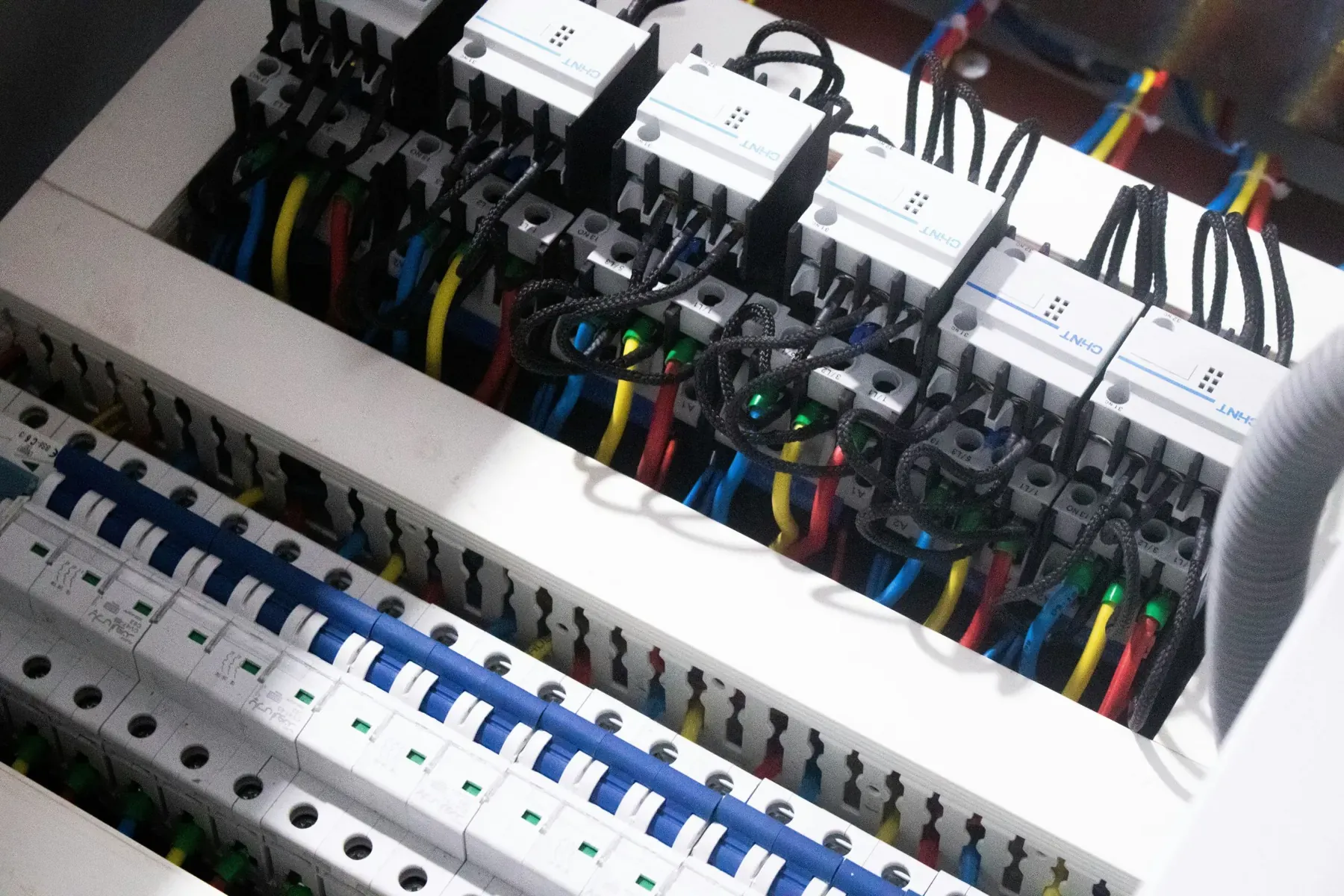
What commercial electricians in Reno handle
- Tenant improvements (TI) and build-outs
- New circuits, lighting, data/low-voltage coordination, and panel work for retail, office, restaurant, and warehouse spaces — usually the largest single category of Reno commercial electrical work as spaces turn over.
- Service and panel upgrades
- Three-phase service, larger switchgear, distribution panels, and sub-panels when a business adds equipment, HVAC, or EV charging beyond what the building was designed for.
- Lighting retrofits and controls
- LED conversion, occupancy sensors, daylight controls, parking-lot and exterior lighting — often utility-incentive-eligible; ask the contractor about NV Energy commercial programs.
- EV charging for fleets and customers
- Level 2 banks with load management, or DC fast charging where the service can support it. Site power availability drives the budget more than the chargers do.
- Code corrections and inspection findings
- Fixing items flagged by a fire marshal, insurer, building inspector, or a buyer's due diligence — grounding, overloaded circuits, missing GFCI/AFCI, improper splices.
- Emergency and backup power
- Generator transfer switches, emergency/egress lighting, exit signs, and periodic testing that occupancy permits require.
- Equipment hookups
- Dedicated circuits for kitchen equipment, compressors, machinery, walk-in coolers, and medical/dental equipment.
Commercial rates vs. residential, and why
The $100–$130/hr commercial rate runs 10%–20% above the $40–$120/hr residential range for concrete reasons, not markup: three-phase distribution and larger conductors, conduit and raceway instead of cable, engineered drawings and plan review, work sequenced around other trades and business hours, and stricter inspection. Materials are also a bigger share of the total — commercial-grade panels, switchgear, and fixtures cost multiples of their residential equivalents.
In practice you'll rarely be billed by the hour. Expect a fixed bid built from a site walkthrough, with change orders for anything the walk didn't reveal (the most common one: the existing service is smaller than the building's drawings claim). A contractor who won't itemize permit, inspection, and materials separately in the bid is making comparison impossible — ask for the breakdown.
Methodology. Commercial hourly rate and the commercial premium are HomeGuide's 2026 electrician cost-per-hour data (February 2026); no Reno-specific commercial rate survey exists that we can cite, so we don't adjust the national figure. Recheck before republishing.
Permits and inspections for commercial work in Reno and Sparks
Reno, Sparks, and Washoe County share a single permitting system — ONE Regional Licensing & Permits at onenv.us — so commercial electrical permits are filed through one portal regardless of which of the three jurisdictions the building sits in. What changes by jurisdiction is the inspector and the fee schedule, not the process. Tenant improvements typically pair the electrical permit with a building permit and plan review, and occupancy-related items (egress lighting, exit signs, fire-alarm interfaces) bring the fire authority in as well. Build permit lead time into the schedule; a contractor promising to "start Monday" on a TI that hasn't been submitted is promising something the system doesn't allow.
Budgeting a tenant improvement: where the electrical money goes
On a typical Reno retail or office TI, the electrical scope splits into roughly four buckets, and knowing them makes a bid legible. Distribution — whether the existing service and panel can carry the new load, or need a sub-panel or upgrade (the item most likely to appear as a change order, because it's discovered behind a cover). Branch circuits and devices — receptacles, dedicated equipment circuits, and the conduit to reach them, which scales with the floor plan. Lighting and controls — fixtures, occupancy and daylight sensors, and emergency/exit lighting that the occupancy inspection requires. Low-voltage coordination — data, security, and fire-alarm interfaces are often separate trades, but the electrician provides the pathways and power. Ask for the bid broken out this way; a single lump sum hides which bucket is driving the number.
Vetting a commercial electrical contractor: the checklist
- C-2 license with the right subclass (C-2a for general commercial work), verified at app.nvcontractorsboard.com — see the how-to-hire guide for the walkthrough.
- Monetary limit on the license at or above your contract value. It's shown on the NSCB record.
- License number on the bid (NRS 624.720 requires it on advertising; a bid without one is a flag).
- Certificate of insurance naming you or the property as additional insured for the project, with general liability and workers' comp — get the certificate, not a verbal "we're insured."
- Comparable project references — a restaurant build-out and a warehouse lighting retrofit are different jobs; ask for the one that matches yours.
- Lien releases tied to progress payments, so a subcontractor or supplier dispute can't attach to your property.
- A schedule commitment in the contract, with permit submission as the first milestone.
Commercial electrician questions
How much does a commercial electrician cost in Reno?
As of September 2026, commercial electricians in Reno, NV typically bill $100–$130 per hour — about 10%–20% more than residential rates, reflecting three-phase systems, conduit-heavy work, and commercial code requirements. Most commercial jobs are bid as a fixed price after a walkthrough rather than billed hourly.
Does my tenant improvement need a permit in Reno?
Almost always. Commercial electrical work in Reno, Sparks, and Washoe County is permitted and inspected through the shared ONE Regional Licensing & Permits portal (onenv.us), and most TI work also involves a building permit and plan review. Your electrical contractor coordinates the electrical permit; the general contractor or architect usually holds the building permit.
What license should a commercial electrician in Nevada have?
The Nevada State Contractors Board classification C-2 (Electrical Contracting), typically with the C-2a subclassification for general electrical wiring, alteration, and repair. Every NSCB license also carries a monetary limit — the maximum single-contract value the licensee is bonded for — so for a large TI, confirm the limit covers your contract value at app.nvcontractorsboard.com.
Can a residential electrician do commercial work?
It depends on the license subclassification. A contractor licensed only under C-2f (residential wiring, up to three stories and 600V) is not licensed for general commercial work; C-2a covers it. Check the subclass on the NSCB lookup, not just the C-2 heading.
How do I get more than one bid without slowing the project down?
Send every bidder the same scope: drawings or a marked-up floor plan, the equipment schedule with nameplate loads, the existing service size, and the deadline. Ask for a fixed price with permit and inspection as line items and a schedule commitment. Bids that arrive on the same information are comparable; bids from different site walks rarely are.
Get Matched With a Local Electrician
Form goes live in Phase 8. Structure only for now.